
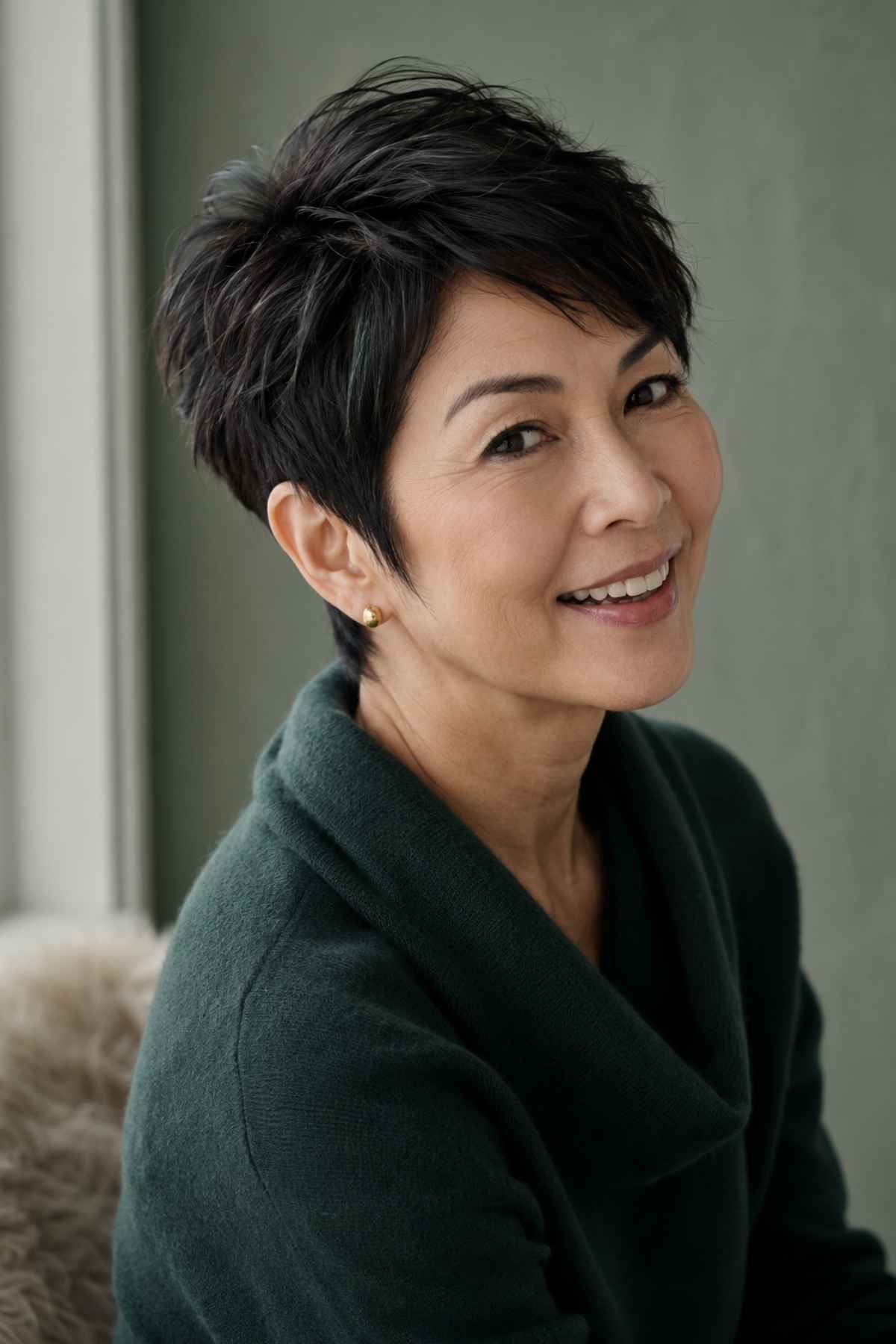
There’s a specific moment a lot of women describe: standing in the bathroom, looking at hair that used to behave and now simply doesn’t, and wondering what changed. The answer, usually, is everything: density, texture, how fast it grows, how long a blowout lasts. Hair in your fifties is genuinely different from hair in your thirties, not worse, but different. That distinction matters because it changes what a good haircut needs to do.
This guide was built for that moment. Not to tell you to go short, or to keep it long, or to embrace gray, or to colour it. Those are your calls. What Tressora can offer is 25 specific, well-chosen haircuts (across lengths, textures, and hair types) along with enough honest detail to help you figure out which ones are actually worth discussing with your stylist.
A few things you won’t find here: celebrity before-and-afters without real explanation, cuts that only work if you spend an hour on your hair every morning, and the phrase “looks years younger.” A great haircut at 50 doesn’t need to pretend to be something else. It just needs to work for the face you actually have and the life you’re actually living.
The 25 best haircuts for women over 50 below run from short to long, fine hair to thick, natural coils to straight.
At a Glance: 5 Cuts Worth Considering First
| Style | Best For | Maintenance |
|---|---|---|
| Soft Jaw-Length Bob | Most face shapes; fine to medium hair | Low–Medium |
| Textured Lob | Volume-seekers; wavy or straight hair | Low |
| Modern Textured Pixie | Active women; very fine hair | Low |
| Bixie Cut | Transition from short to medium; most textures | Low–Medium |
| Face-Framing Layered Cut | Women keeping length; any texture | Medium |
How to Choose the Right Haircut After 50
What Changes, and Why It Matters
The hormonal shifts of perimenopause and menopause affect hair in ways that are real and measurable: slower growth, reduced density, drier texture, and a sometimes-dramatic change in how hair behaves after washing. Gray hair also has a different physical structure than pigmented hair: it’s coarser, more porous, and tends to pick up humidity differently. None of this means your hair is damaged or beyond help. It means the criteria for a good cut have changed.
Three Questions Before You Book
Before you sit in the chair, answer these honestly:
How much styling time do I actually want to spend? Not how much you think you should be willing to spend. How much will you realistically do on a Tuesday morning running late.
What’s my hair’s density right now? Full, medium, or noticeably fine at the crown? This single factor shapes nearly every cut recommendation in this guide.
Am I working with gray, blending it, or covering it? The answer changes which cuts look intentional and which ones look like a grow-out.
A Word on Face Shape
Face shape matters because it tells you where your cut needs to add width, height, or softness. The full breakdown is further down. For now: if you don’t know your face shape, pull your hair back, look straight in the mirror, and trace the outer edge in your mind. That outline is what your haircut is either working with or against.
Best Haircuts for Women Over 50: Short Styles
Short hair solves specific problems that length cannot, particularly for fine hair that’s lost density. With less hair to weigh itself down, a short cut can hold volume, show texture, and dry faster. That said, short is not a universal solution. The cuts below range from genuinely short to short-ish, and each has a distinct logic.
1. The Modern Textured Pixie
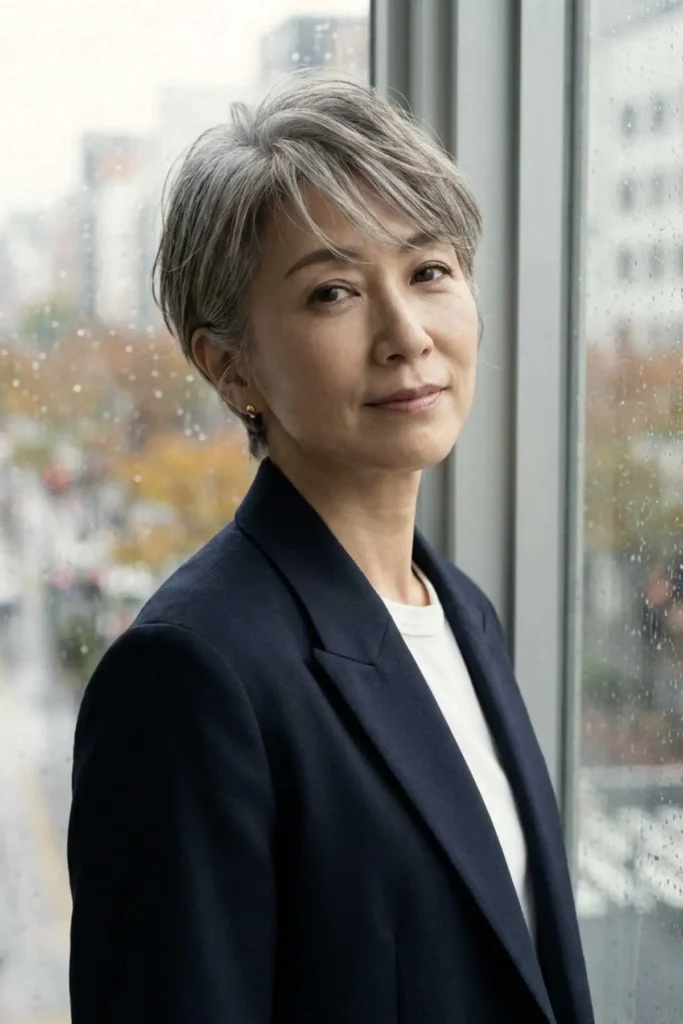
This is the shortest cut in the guide and, for the right person, the most liberating. The modern textured pixie sits close at the nape and sides with deliberate, tousled lift through the crown, with individual pieces styled to catch light rather than lying flat. It reads nothing like the helmet-shaped pixies of the 1980s. The texture is the whole point.
BEST FOR
- Fine or thinning hair
- Active lifestyles
- Heart and oval face shapes
- Women ready to go fully short
Why It Works
Removing length eliminates the weight that pulls fine hair flat. The tousled crown creates volume right where most women over 50 want it most: at the top, near the face.
Styling Tip
Work a small amount of texturizing paste through the crown on dry hair, then finger-style rather than brush. A brush flattens the pieces the cut is built around.
Maintenance
Shape every 4–5 weeks. Fine hair grows out of a pixie faster than it looks like it should.
Who Should Avoid It
Very round faces without strong cheekbones. The short sides can widen the face further. A long pixie (next) is a better option.
2. The Long Pixie
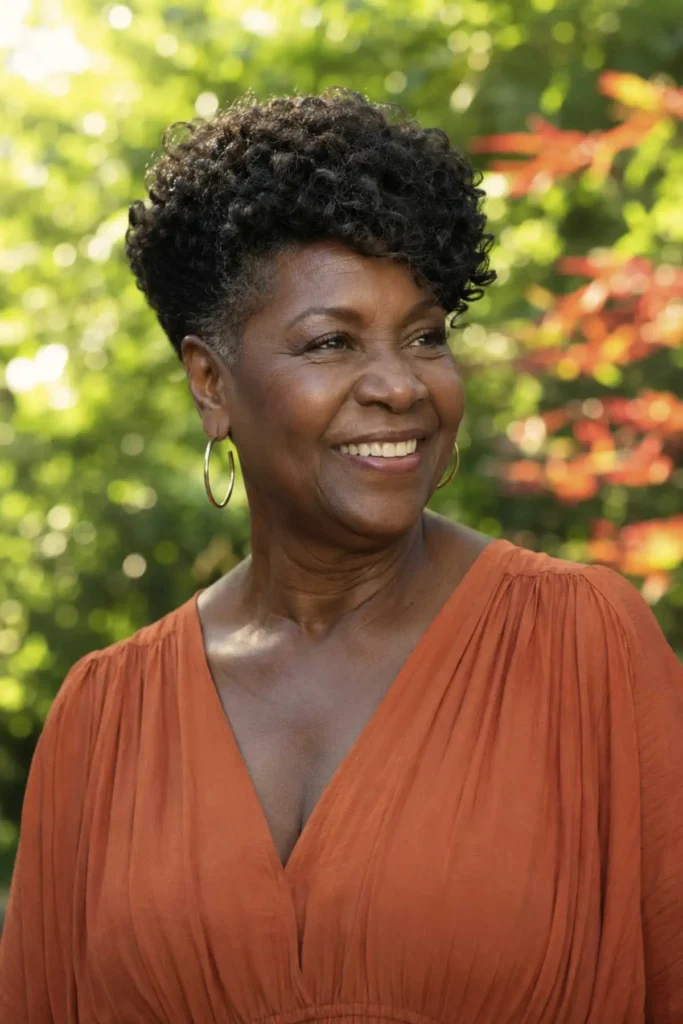
The long pixie keeps the principle of the pixie (short sides, elevated crown) but adds enough length through the top and front to allow two or three styling directions. You can sweep it side-parted for a polished look, push it forward for something softer, or let it sit naturally for minimum effort. It’s the pixie for people who want the benefits of short hair but aren’t ready to commit to a single look.
BEST FOR
- Women transitioning from a shorter pixie
- Round and oval face shapes
- Low-maintenance styling
- Natural and relaxed textures
Why It Works
The added length through the crown means you can adjust the shape slightly depending on the day. For round faces, the extra height elongates the face in a way a shorter pixie cannot.
Styling Tip
On naturally coily hair, apply a curl cream before air-drying and let the front pieces define themselves. On straight hair, a small round brush at the crown adds the lift.
3. The Choppy Jaw-Length Bob
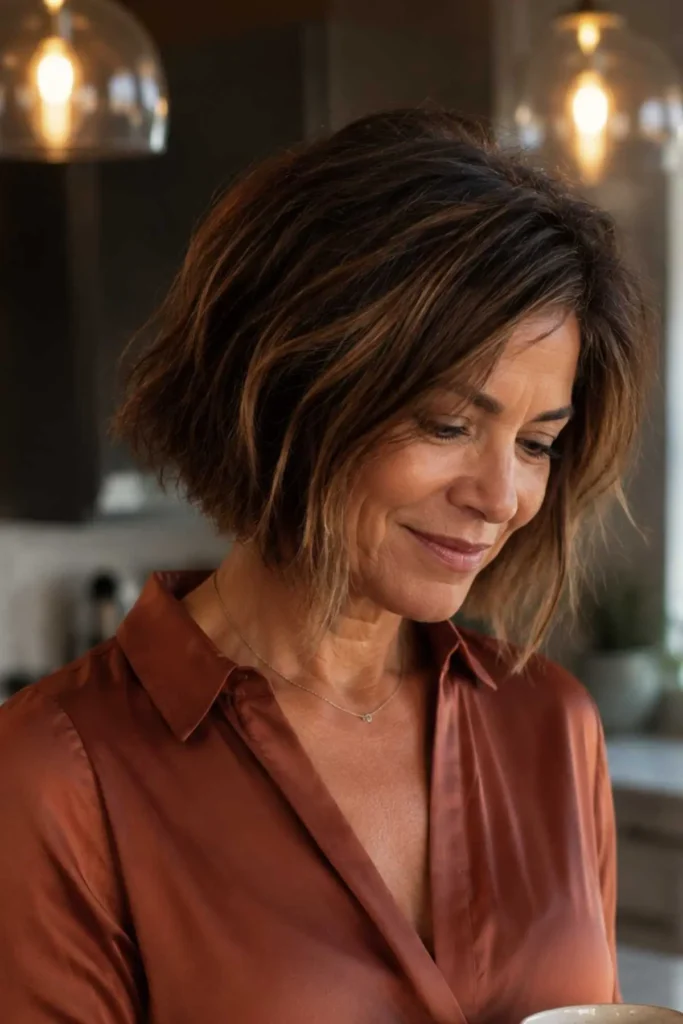
Where a classic bob is smooth and uniform, a choppy bob is deliberately uneven at the ends, point-cut or razor-cut to create visible texture. At jaw length, it lands in a particularly useful spot: short enough to feel modern, long enough to soften a square jaw. The 2026 version of this cut leans natural rather than styled-to-death; it should look good on day two without touching it.
BEST FOR
- Medium and thick hair
- Square and oval face shapes
- Women who want texture without going short
- Everyday wear
Why It Works
Choppy ends on a bob break up the solid line that can make thick hair look heavy. The jaw-length point frames the lower face and draws attention to the cheekbones.
Best Hair Texture
Medium to thick. On very fine hair, heavily point-cut ends can look thin, so ask for a lighter version of the technique.
Styling Tip
Let this one air-dry when you can. The natural movement of choppy ends reads better without a full blowout. A diffuser or just time gives you the right amount of undone texture.
4. The French Bob
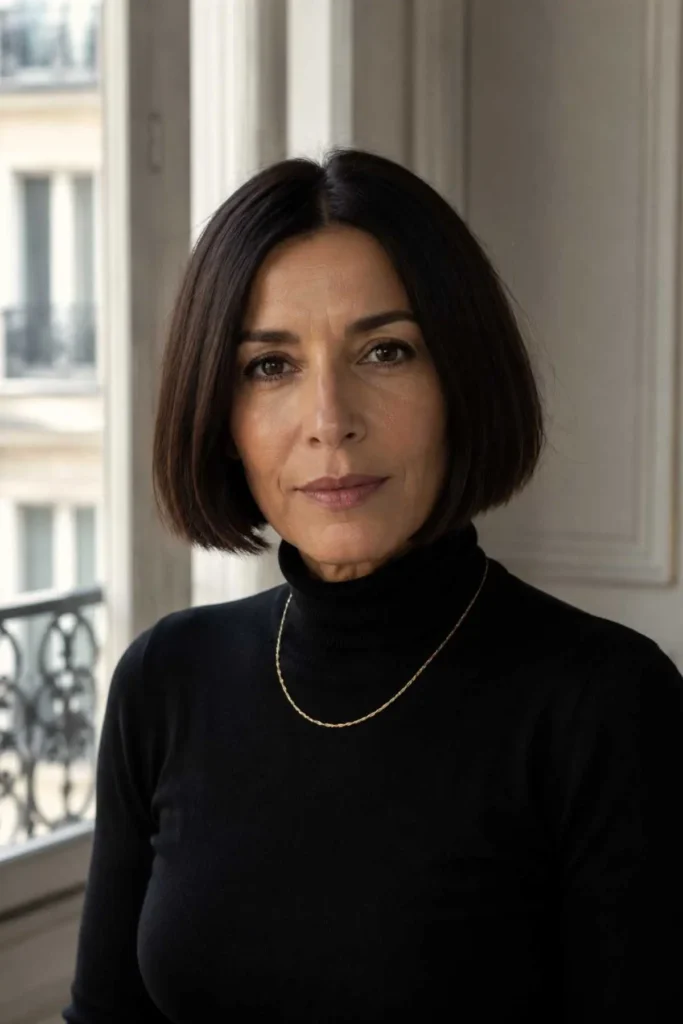
The French bob sits between the earlobe and chin, shorter than a classic bob, and cut with a clean blunt line. It’s the most architecturally precise cut in this guide. Everything depends on the quality of the cut itself. When it’s right, there’s nothing else to add. A well-executed French bob looks good entirely on its own.
BEST FOR
- Oval and heart face shapes
- Medium to thick hair
- Women who want a bold, clean look
- Low styling effort (if your hair holds shape naturally)
Why It Works
The shorter length creates natural volume through the sides without product. The blunt line gives the cut authority: it looks intentional in a way softer cuts sometimes don’t.
Who Should Avoid It
Fine hair that won’t hold the blunt line between washes. A French bob that loses its shape quickly is a high-maintenance cut on low-density hair.
Maintenance
Every 4 to 5 weeks to keep the line precise. This is not a cut that grows out gracefully on its own.
5. The Tapered Nape Bob
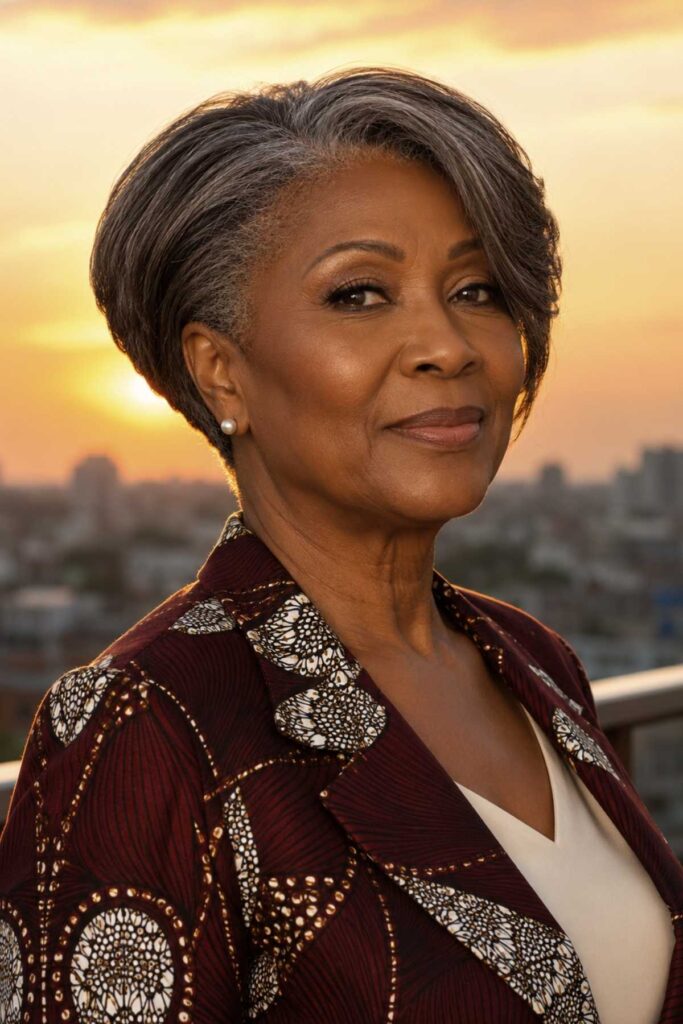
The back of this bob graduates shorter toward the nape, creating lift and removing bulk exactly where thick hair tends to accumulate weight. The sides and front remain longer, producing a diagonal line that’s longer at the front than the back. It’s a particularly smart cut for thick or coarse hair, and one of the more flattering options for natural and relaxed Black hair textures.
BEST FOR
- Thick, coarse, or natural hair
- Heart and oval face shapes
- Women with heavy nape hair
- Textures that need structure
Why It Works
Weight at the nape pulls everything down. Removing it creates an instant lift that reads through the whole silhouette.
Salon Tip
Ask your stylist to graduate the nape in two or three steps rather than one clean line, which gives a more refined, less blocky appearance as the cut grows out.
6. The Bixie Cut
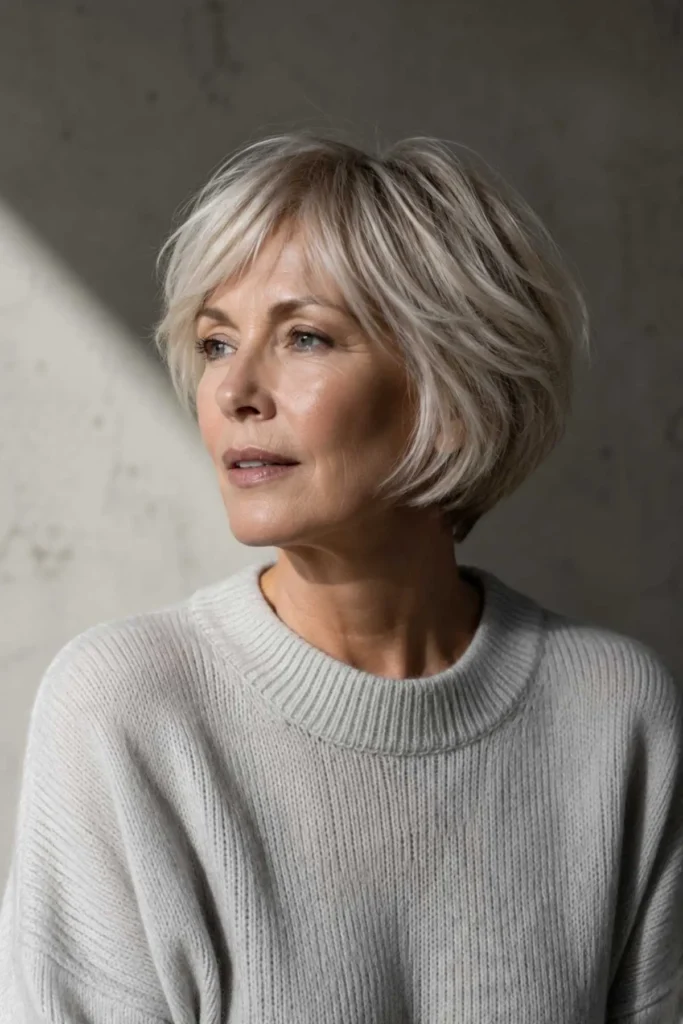
The bixie landed in editorial vocabulary a few years ago and has stayed because it fills a genuine gap: it’s longer than a classic pixie (reaching just below the ear) and shorter than any bob, with feathering throughout that gives the cut movement and softness. For women unsure about going fully short, it’s a more useful starting point than most “safe” medium cuts.
BEST FOR
- Fine to medium hair
- Women uncertain about short hair
- Wavy and naturally textured hair
- Oblong and oval face shapes
Why It Works
The graduation creates crown lift without the commitment of a true pixie. The length grows into a classic bob, which means you have an exit strategy if it’s not quite right.
Editor’s Note
The bixie suits natural gray well. The silver and ash tones that come with natural gray often look more dimensional at this length, where each piece of hair is visible.
Medium-Length Haircuts for Women Over 50
Medium length is the most popular choice in this age group, and for good reason: it’s versatile enough to wear down or up, works across densities when cut correctly, and doesn’t require a complete identity shift. The cuts below range from chin to shoulder, the most navigated territory in hairstyling for women over 50.
7. The Soft Jaw-Length Bob
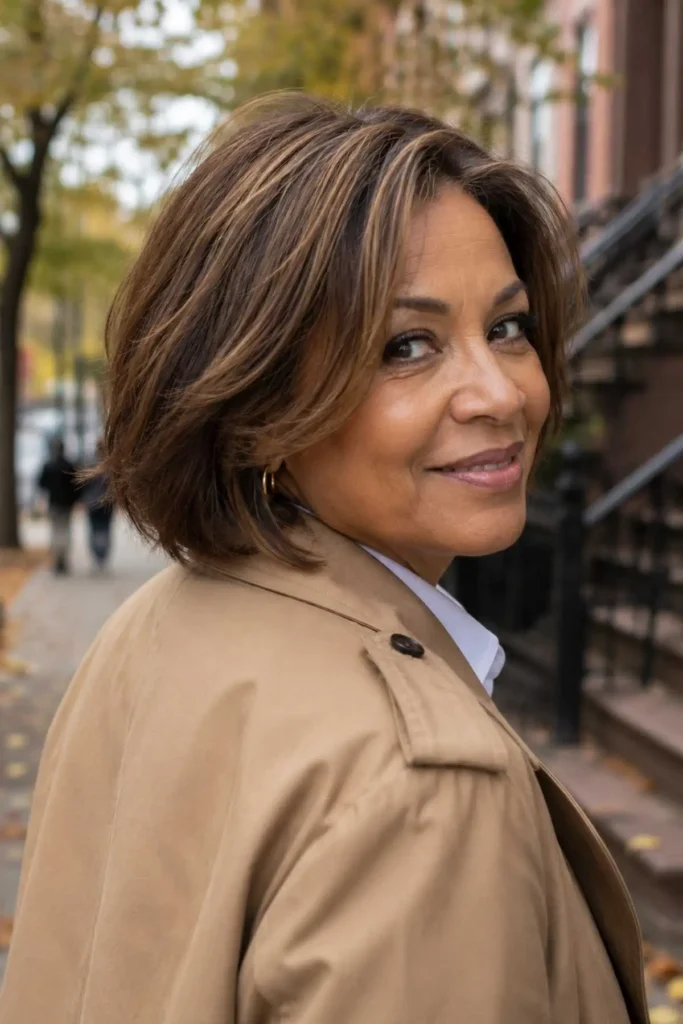
If there’s a single cut this guide would point most readers toward first, this is it. The soft bob differs from the choppy and French versions above in one crucial way: everything about it is intentionally gentle. The ends are feathered rather than blunt. The line is suggested rather than sharp. The hair moves. On almost every face shape and at most densities, a well-cut soft jaw-length bob does something right.
BEST FOR
- Most face shapes
- Fine to medium hair
- Women wanting something flattering without drama
- Everyday versatility
Why It Works
The jaw-length sits at the most universally flattering point on the face. It frames without covering, it shortens the visual line of the neck slightly, and it draws attention to the cheekbones. The feathered ends give it life without requiring daily styling to maintain.
Styling Tip
For fine hair: a root-lifting spray before you blow-dry, then a round brush only at the roots. Leave the ends alone, because fine hair that’s over-styled at the ends goes limp faster.
Best Face Shapes
Oval, round, and heart. For square faces, consider keeping the front pieces slightly longer to soften the jaw angle.
8. The Lob: The Collarbone Cut

The lob (long bob) has been the most persistently popular cut across age groups for the better part of a decade, and its staying power is earned. At collarbone length, with the right layering, it accommodates nearly every lifestyle: worn straight, wavy, or pulled back. It’s also the most popular first cut for women transitioning from long hair, short enough to feel like a change, long enough to feel safe.
BEST FOR
- Most densities with layering
- Wavy and straight hair
- Women transitioning from long hair
- Versatility day to day
Why It Works
The collarbone is where the eye naturally rests when it travels down the neck. A cut that ends there creates a clean, confident silhouette without requiring any structural support to do it.
Styling Tip
A collarbone-length lob is one of the most forgiving lengths for air-drying. If your hair has any natural texture, apply a light wave spray while damp and leave it. The result is usually better than a blowout on medium-density hair.
9. The Clavicut
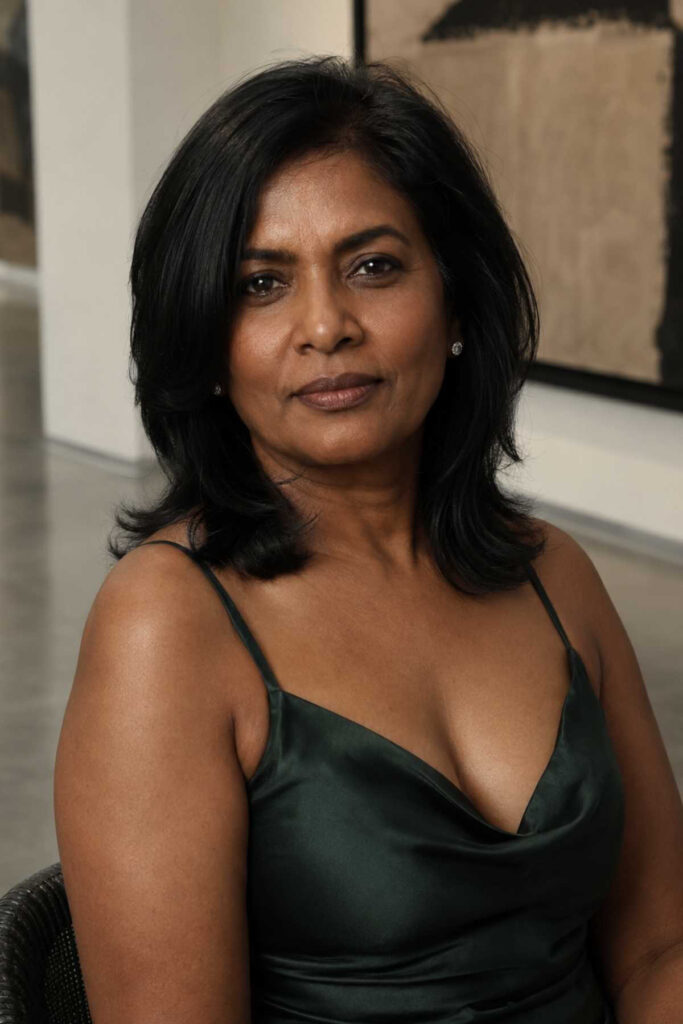
The clavicut sits at the collarbone, only centimetres longer than a classic lob, but it’s distinct in how it’s cut: more structured, with stronger face-framing pieces at the front that are intentionally longer than the sides, creating a diagonal that pulls toward the jaw. It’s a slightly bolder, more architectural version of the collarbone cut, and it works particularly well on thick, dark hair where the structure shows clearly.
BEST FOR
- Medium to thick hair
- Square and heart face shapes
- Straight or lightly wavy hair
- Women who want length with clear definition
Why It Works
The diagonal line of the face-framing pieces draws the eye from the outer edge of the face toward the chin, which softens wide jaw angles and flatters angular faces.
Salon Tip
Tell your stylist you want the face-framing pieces to start at the cheekbone and end about an inch longer than the back section. That specific diagonal is what makes this cut distinct from a standard lob.
10. The Layered Mid-Length Cut
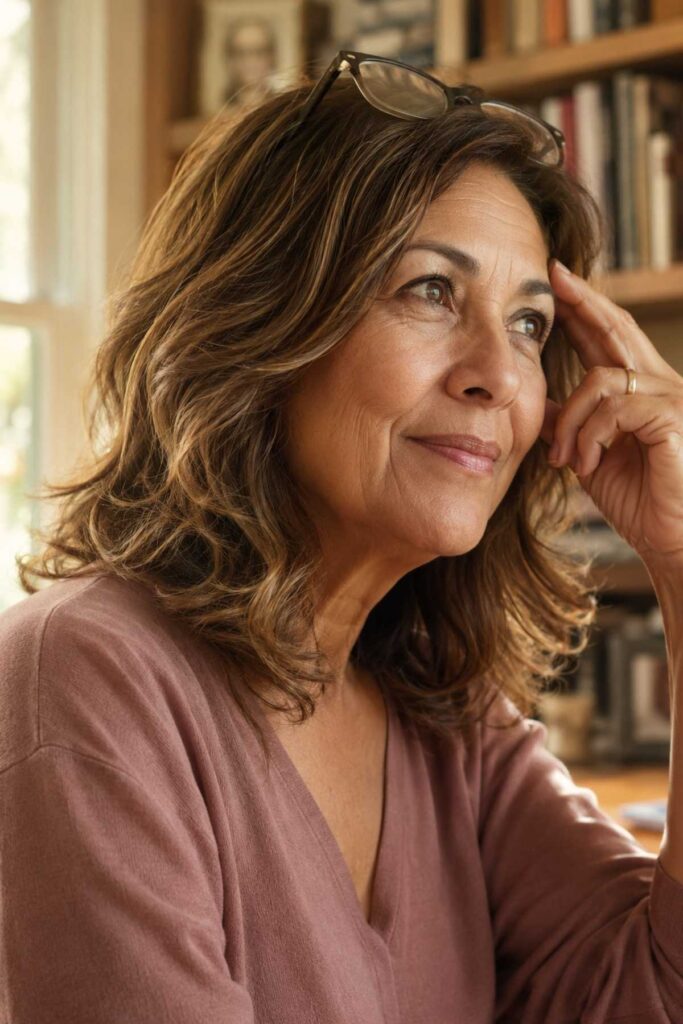
This is the most common request at salons for women over 50, and it’s often described vaguely: “something with layers, shoulder length.” What makes the difference between a layered mid-length that works and one that falls flat is layer placement. The right placement creates movement through the mid-section while leaving enough weight at the ends. Too light, and the fine hair floats without structure. Too heavy, and it sits flat.
BEST FOR
- Fine and wavy hair
- Natural gray or growing-out colour
- Women wanting texture without going shorter
- Most face shapes
Why It Works
Layers allow fine hair to move rather than just hanging, which creates the visual impression of more body than the hair actually has.
Salon Tip
Specify where you want the layers to start. For fine hair: “layers starting at the cheekbone level, nothing above that.” Layers that start too high on fine hair create a triangular shape that adds width at the crown and flattens the mid-section.
11. Curtain Bangs with a Lob
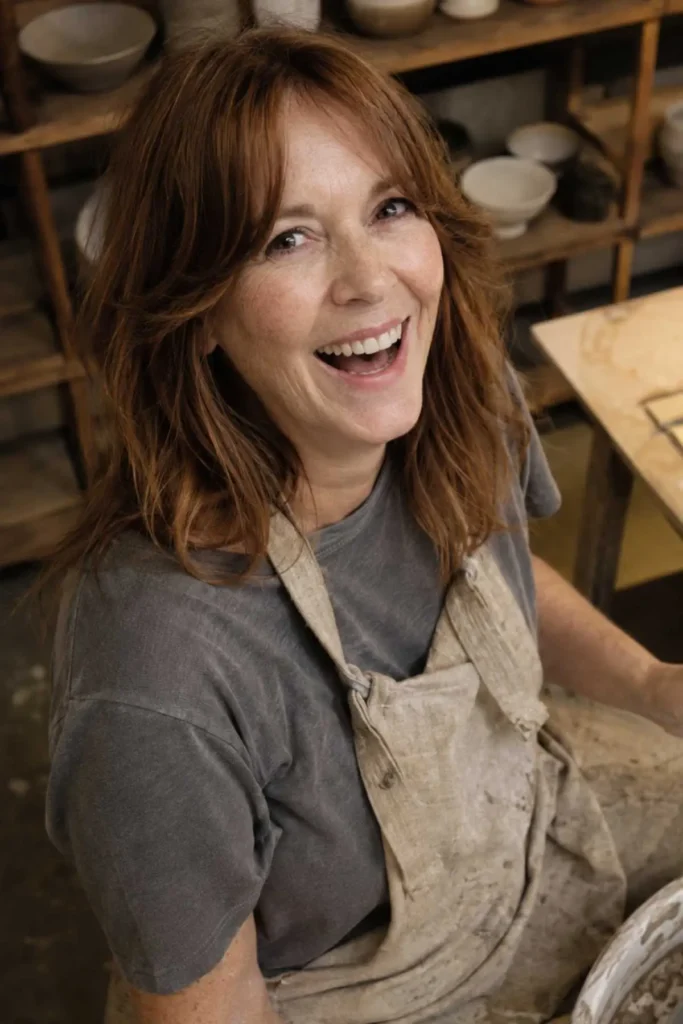
Curtain bangs have earned their place in this guide not as a trend but as a practical solution. They’re parted in the centre, wispy at the ends, and swept gently outward rather than cut straight across, so they grow out into layers rather than a blunt fringe that demands weekly trims. Paired with a lob, they create a full, cohesive style that’s more versatile than it looks.
BEST FOR
- Oval and heart face shapes
- Women wanting a refresh without changing length
- Straight to wavy hair
- Low-maintenance fringe option
Why It Works
The open centre part creates softness around the eyes without covering the forehead. On an oblong face, they add width through the top without making the face look shorter.
Who Should Avoid It
Narrow foreheads. If the distance from your brows to your hairline is already limited, curtain bangs can crowd that space. Ask your stylist to customise the starting point.
Maintenance
Bangs grow faster than the rest of the hair. Plan for a trim every 5–6 weeks, even if the lob itself needs nothing.
12. The Invisible Layered Bob
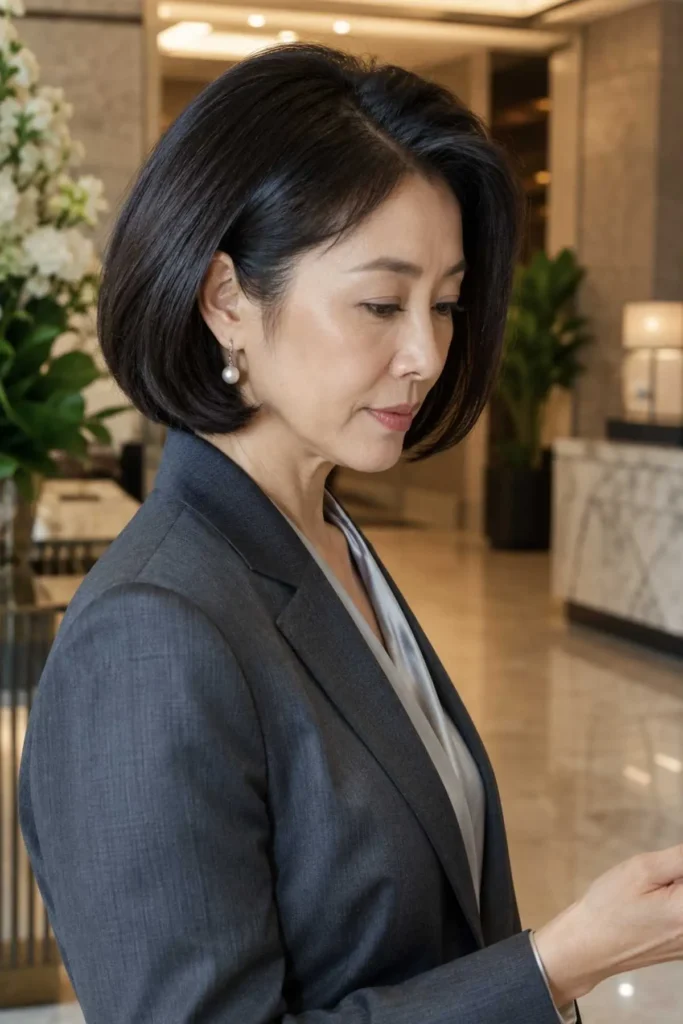
Invisible layers are cut underneath the top section of the hair, so the exterior line of the bob remains clean while the underneath is lightened and given movement. It’s a stylist’s technique more than a named cut, but it solves a specific problem: the woman who loves the look of a classic bob but finds bobs go flat or heavy by mid-afternoon. This is the version that doesn’t.
BEST FOR
- Medium to thick hair
- Straight hair that holds shape
- Women who want a polished exterior and real movement
- Professional and everyday wear
Why It Works
The clean outside line of a bob telegraphs polish. The internal layers mean that when the hair moves (turning your head, wind, walking) it moves with life rather than in a single stiff piece.
Styling Tip
Blow-dry in sections, directing the underlayers forward and the top layer backward. This separation is how the internal movement becomes visible in the finished style.
13. Loose Beach Waves (Medium Length)
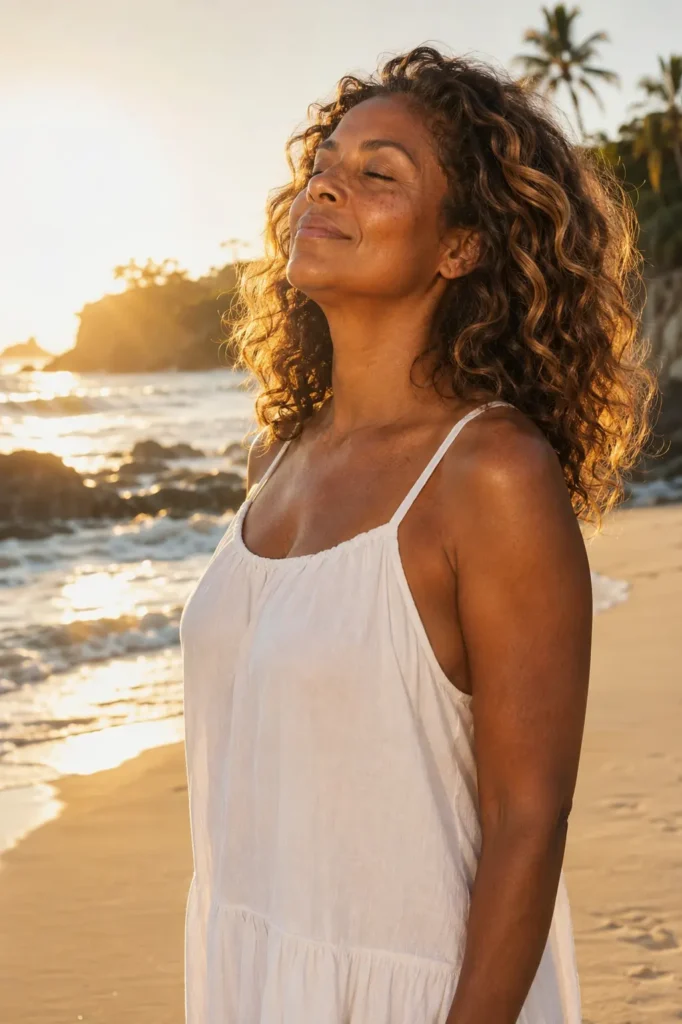
This is a styling category as much as a cut. The underlying cut is usually a layered lob or mid-length. The finish that defines it. Loose beach waves work when the texture looks like it belongs to the hair, not like something applied on top of it. On naturally wavy or textured hair, that’s just a matter of technique. On straight hair, it takes a little more intention.
BEST FOR
- Naturally wavy and textured hair
- Heart and oval face shapes
- Casual and coastal aesthetics
- Women who prefer air-drying
Why It Works
Textured movement through shoulder-length hair creates visual density. It reads as fuller than it is. The relaxed quality also reads as effortless, which is its own kind of polish.
Styling Tip
For naturally wavy hair: scrunch a lightweight wave spray into damp hair and leave it alone. Touching it while it dries breaks the wave pattern. For straight hair: wrap one-inch sections around a curling wand, alternating direction, then shake out and finish with a light sea-salt spray.
Long Haircuts for Women Over 50
Long hair after 50 is a completely reasonable choice, and the idea that women of a certain age should cut their hair short is exactly the kind of unsolicited opinion this guide has no interest in passing on. What’s true is that long hair after significant density loss needs more intentional cutting than it did at 30. The right layering technique makes the difference between long hair that looks healthy and one that looks strained.
14. Long Layers with Face-Framing Pieces
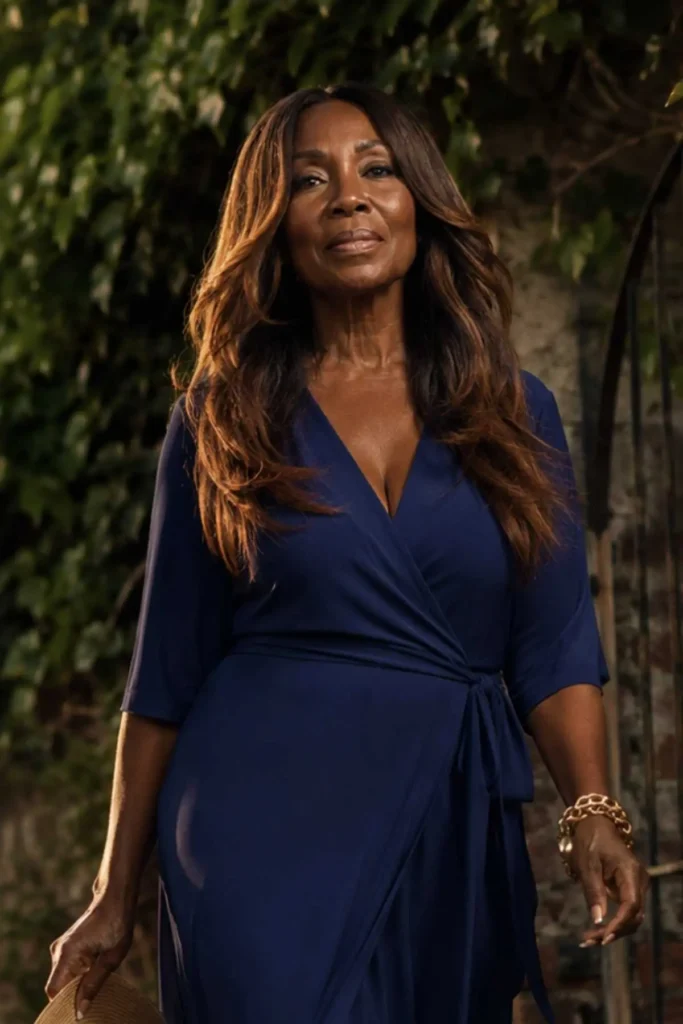
The face-framing pieces here are not decoration. They’re the primary purpose of the cut. Layers placed specifically to fall alongside the cheeks and jaw draw the eye upward toward the cheekbones and away from the weight of the full length. The rest of the hair remains longer and is layered through the mid-section. This cut refreshes long hair without removing what makes it distinctive.
BEST FOR
- Women keeping length
- Thick and medium-density hair
- Diamond and oval face shapes
- Women growing out shorter styles
Why It Works
The face-framing pieces do what a full cut does for shorter styles: they draw the eye upward toward the face, rather than letting the weight of the full length pull attention downward.
Styling Tip
When blowing out long layered hair, dry the face-framing pieces last and with the most care. They do the most visual work and deserve the most attention.
15. The Soft Shag
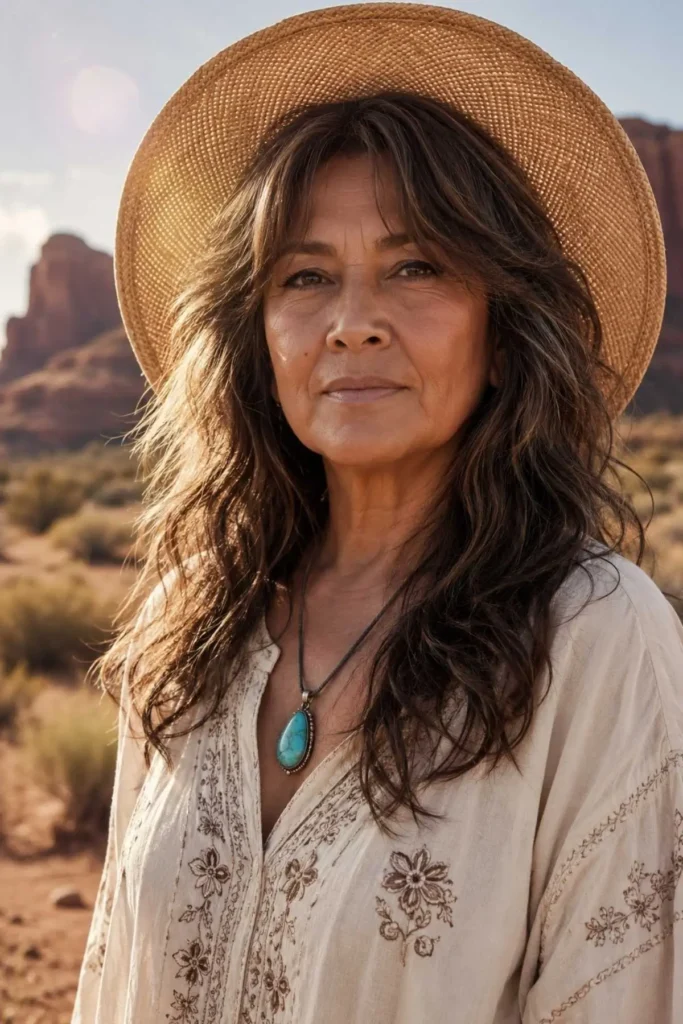
The 2026 soft shag is feathered throughout, from crown to ends, with a rounded silhouette at the top that softens as it descends. It rewards natural texture more than any other cut in this guide. If your hair has any wave at all, a shag will find it and amplify it. The curtain-bang variation adds a cohesive front section that ties the layering together.
BEST FOR
- Wavy and curly hair
- Women who prefer minimal styling
- Most face shapes
- Hair with natural movement
Why It Works
The feathered layers mean the hair moves in multiple directions at once rather than in one weighted mass. That movement reads as vitality regardless of density.
Who Should Avoid It
Very fine, straight hair without natural texture. The shag’s layers can become too visible and create a stringy look without the wave pattern to fill them in.
16. The Octopus Cut
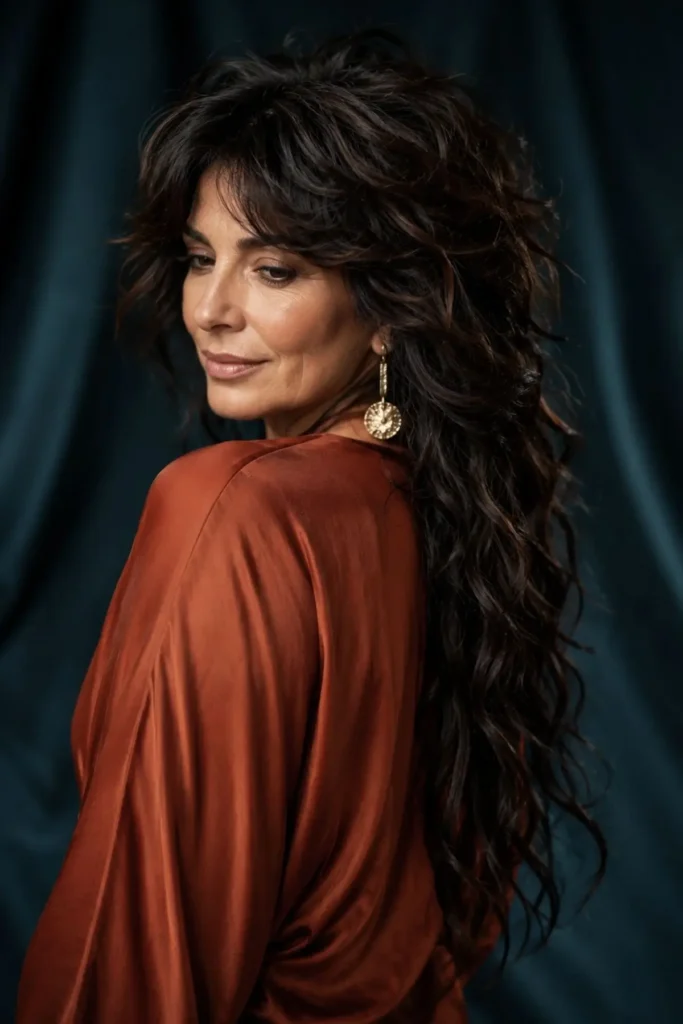
The octopus cut has a very specific silhouette: the crown and upper section are full and rounded, while the lower layers are distinctly longer and thinner. Those are the “tentacles” that give the cut its name. It’s the boldest long cut in this guide, and it requires the right density to work. But for a woman with thick, wavy hair who finds conventional long cuts too heavy, it’s a genuine solution.
BEST FOR
- Medium to thick wavy or curly hair
- Women with too much weight through the mid-lengths
- Square and oval face shapes
- Women who want drama with long hair
Why It Works
The crown volume creates a lifting effect around the face; the lighter lower layers lose the dragging weight that makes thick long hair feel exhausting.
Maintenance
The contrast between upper and lower sections needs refreshing every 7 to 8 weeks. This is a cut that requires a committed stylist relationship.
Haircuts for Fine and Thinning Hair Over 50
Fine hair and thinning hair are not the same thing. Fine hair refers to the diameter of each individual strand; thinning refers to having fewer strands overall. Many women over 50 experience both: finer individual hairs and reduced density, which compounds the challenge. The cuts below address both scenarios.
17. The Volume Bob (Blow-Dried Round Shape)
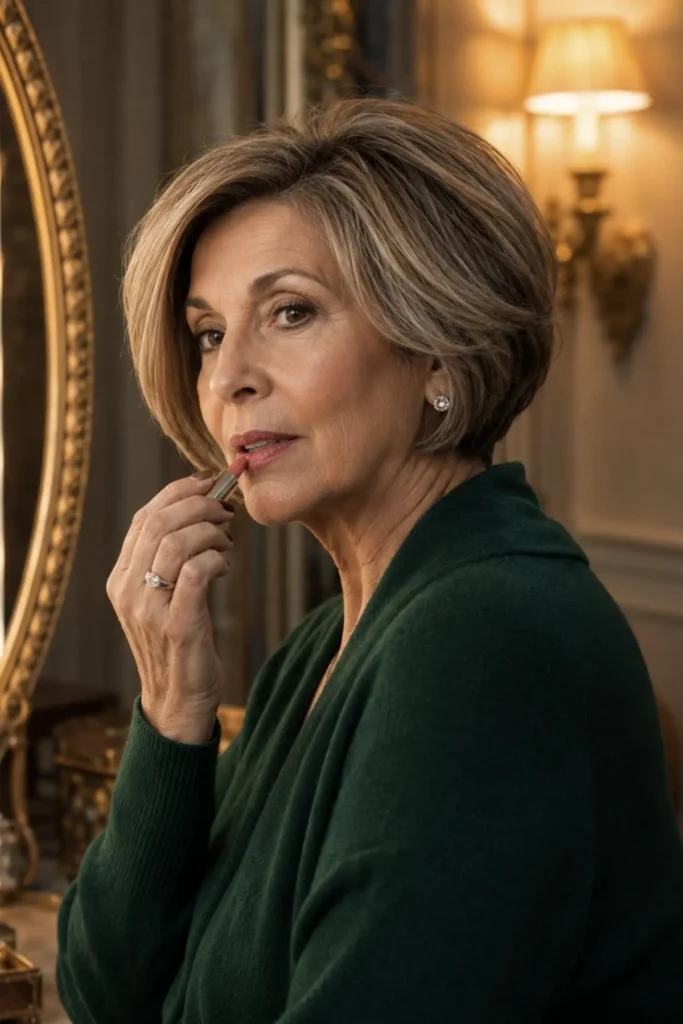
This bob is defined almost as much by its finish as its cut. The underlying structure is graduated, shorter at the nape, but the visual impact comes from a round-brush blowout that builds the hair into a rounded dome from root to end. It’s the most density-creating finish in hairdressing, and on fine hair it produces results that genuinely surprise people.
BEST FOR
- Fine to medium hair
- Reduced density at the crown
- Heart and oval face shapes
- Women comfortable with a regular blowout
Why It Works
The rounded blowout direction creates lift through the crown and fullness through the sides simultaneously, using the hair’s own structure to hold the shape.
Styling Tip
Root-lifting spray on damp hair before drying, applied only to the roots, not the mid-lengths or ends. Work in sections from the nape forward, using the brush to direct the hair upward before pulling it outward. Finish each section with the cool shot on your dryer.
Maintenance
Trims every 5–6 weeks. Fine hair in a graduated bob loses its shape faster than thicker hair.
18. The Feathered Pixie for Fine Hair
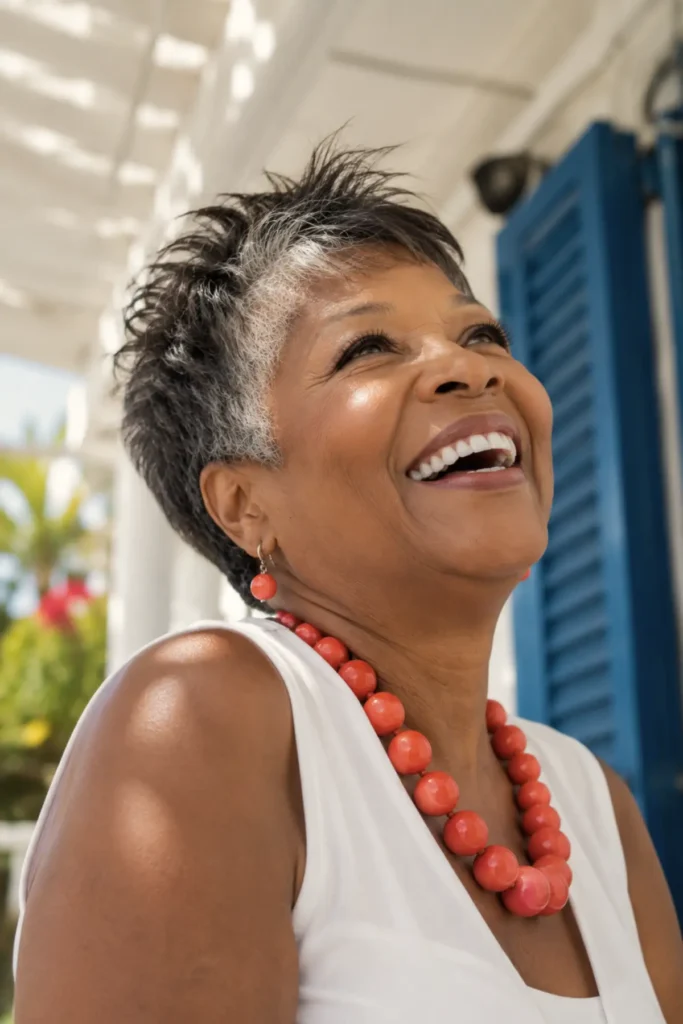
If fine hair is the problem, short is often the most honest solution. The feathered pixie, with point-cut wispy ends rather than blunt lines, takes that logic further by making texture visible at every length. Each feathered piece catches light individually, creating the appearance of density that no product can fully replicate on longer fine hair.
BEST FOR
- Very fine or thinning hair
- Active women
- Heart and oval face shapes
- Women ready to go short
Why It Works
At pixie length, fine hair has no weight to pull it flat. The feathered ends make individual strands visible, which reads as fullness.
Styling Tip
Skip the brush entirely. Finger-dry with a small amount of texturizing paste, shaping the crown while the hair is still slightly damp. Brushing fine hair in a pixie flattens it within an hour.
19. The Wispy Layered Lob for Fine Hair
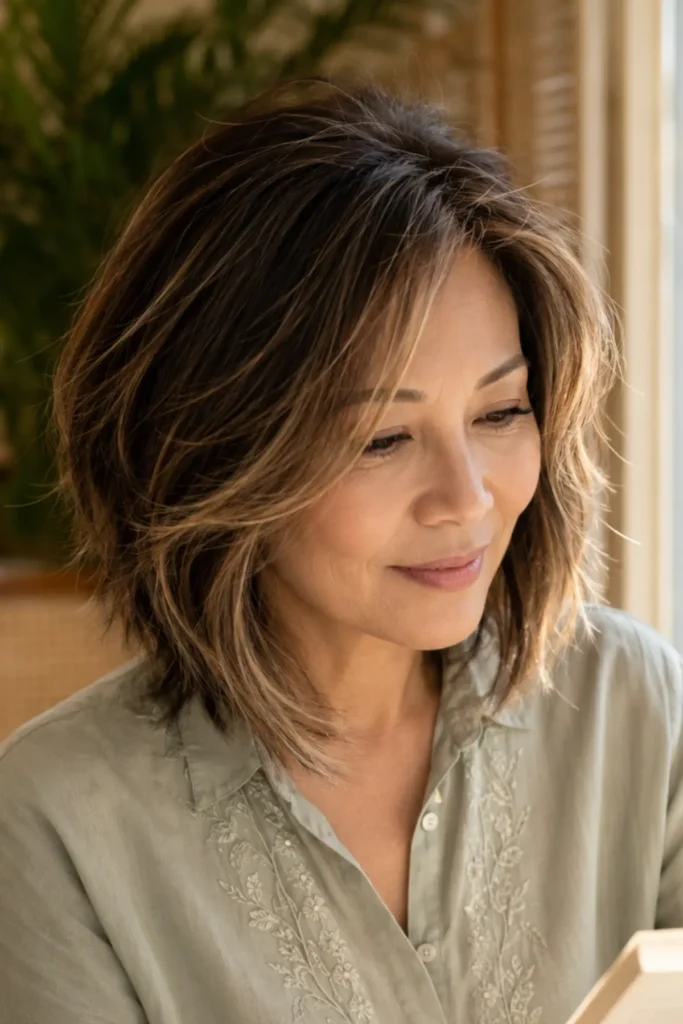
For fine-haired women who want to keep length, this is the most practical option. The key differences from a standard lob: the ends are razor-cut into wisps rather than blunt, and the layers are placed through the mid-section to remove weight without removing length. Blunt ends on fine hair emphasise how thin the hair is at the ends; feathered ends do the opposite.
BEST FOR
- Fine hair that wants length
- Oblong and oval face shapes
- Straight or lightly wavy hair
- Women transitioning away from full-coverage colour
Why It Works
Feathered ends on a lob look delicate rather than thin. It is a small linguistic distinction that makes a large visual difference.
Salon Tip
Ask specifically for a razor-cut finish on the ends, not point-cutting. The razor produces a finer, more tapered result that sits lighter on fine hair.
20. The Silver Pixie: Wearing Gray Short
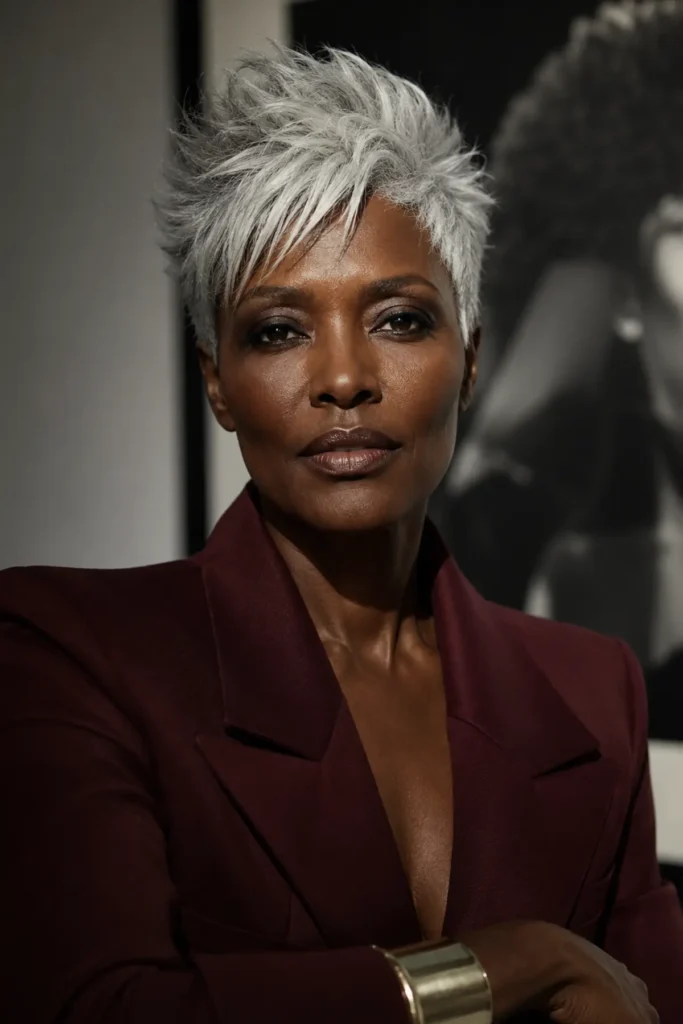
A silver pixie is one of the most striking things you can do with natural gray hair, and one of the least appreciated. Short hair eliminates the length at which gray hair tends to look dry or colourless, and leaves only the luminous, light-catching quality of natural silver. On a woman with strong facial structure, this cut is nothing short of dramatic.
BEST FOR
- Fully gray or silver hair
- Angular and oval face shapes
- Women ready for a bold, decisive change
- Low maintenance
Why It Works
Gray is a colour, and a good one: cool silvers, warm whites, salt-and-pepper contrasts. Short hair displays all of it at once rather than burying it under length.
Styling Tip
Gray hair benefits from a light shine serum rather than matte styling products. Work a pea-sized amount through the crown on dry hair to add lustre. Purple or blue-tinted shampoo once a week counters any yellow tones.
21. The Gray Lob with Balayage Blend
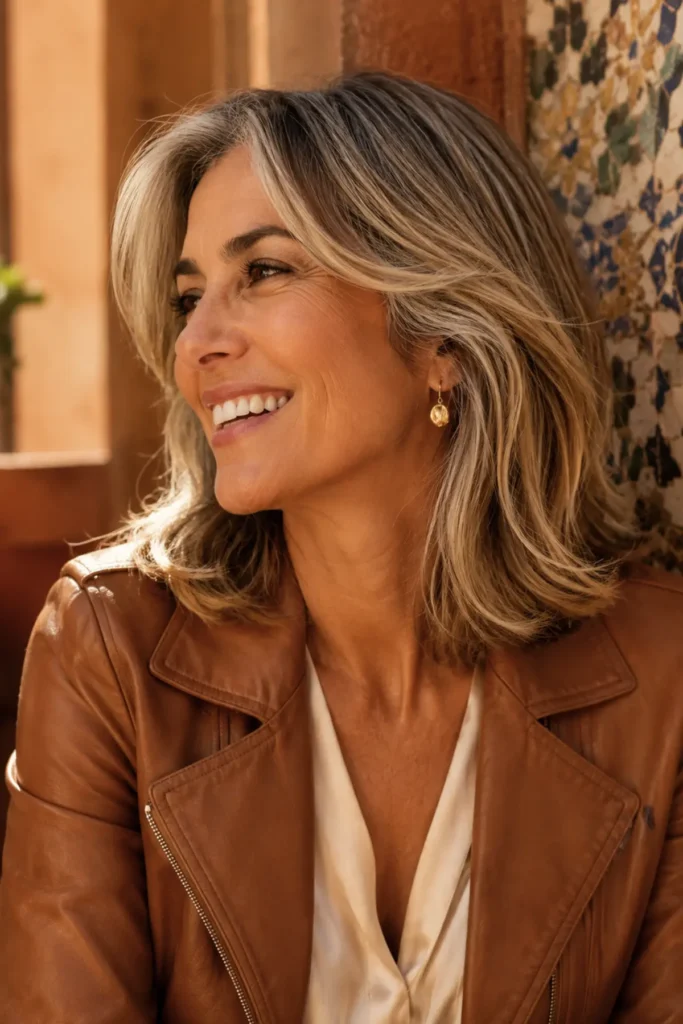
For women mid-transition, with enough gray to make full colour coverage demanding but not yet fully silver, a balayage blend is the most practical and low-maintenance colouring approach available. The technique mimics natural lightening by applying lighter tones through the mid-lengths and ends, which softens the contrast between new gray root and the colour below. The result grows in over months rather than weeks.
BEST FOR
- Women transitioning away from full colour coverage
- Heart and oval face shapes
- Most densities
- Women who want low-maintenance colour
Why It Works
The gradient between the gray root and the lightened mid-lengths means there’s no obvious line where new growth starts. Appointments every 10–12 weeks rather than every 6.
Editor’s Note
A skilled colourist can match the balayage tones exactly to your natural silver: warm silver gets warm blonde, cool silver gets ash. This is where consultation matters more than the technique.
Haircuts by Face Shape: A Quick Reference
Oval: The most versatile. Almost every cut in this guide works. If you have an oval face and you’re unsure what to choose, start with the soft jaw-length bob and go from there.
Round: Add height, avoid width. The long pixie with crown volume, the layered lob with a side part, and the bixie all work well. Avoid blunt bobs that end at the cheekbone, which sit at exactly the widest part of a round face.
Square or Angular: Soften the jaw with wispy ends and movement. The soft shag, the wispy layered lob, and curtain bangs are all good choices. Avoid blunt bobs that end exactly at the jaw, which echo the angular line rather than softening it.
Heart: The forehead is wider than the jaw. Add width low, reduce visual attention at the forehead. The lob, chin-length bob, and gentle curtain bangs all balance the silhouette.
Oblong or Long: Add width, avoid height. Soft shags with volume through the sides and wave patterns that break up the vertical line both work well. Avoid tall-crown styles and sleek centre-parted cuts that make the face look longer.
Haircuts by Hair Texture
22. The Stacked Bob for Thick Hair
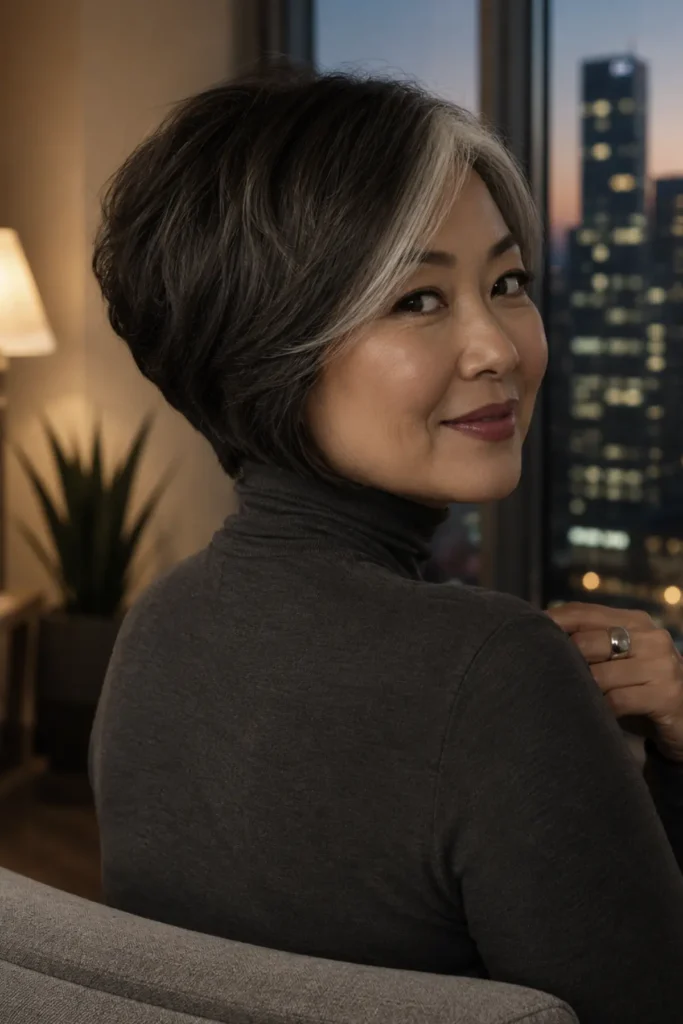
The stacked bob solves a specific problem: thick hair that falls into a heavy, uniform block. By stacking the back shorter at the nape and graduating upward, the cut creates height that visually lengthens the face, while the front sections remain longer and frame the jaw. It’s a structured cut that requires commitment, but for the right hair type it’s transformative.
BEST FOR
- Thick and coarse hair
- Round face shapes
- Straight to lightly wavy hair
- Women who want definition without going short
Why It Works
The stacked back redirects attention upward and creates a silhouette that appears taller. On a round face, that vertical emphasis is exactly what’s needed.
Salon Tip
Ask to see the back of the cut in a mirror before you leave the salon. The stacking should be smooth and graduated, not stepped.
23. Natural Coily Lob for 4B/4C Textures
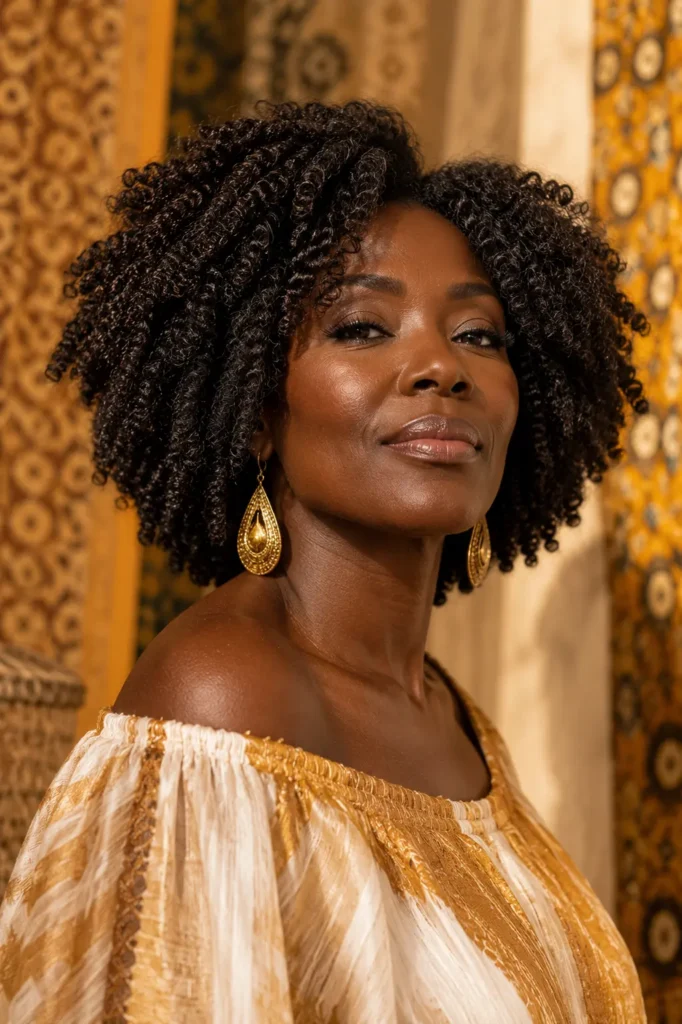
One honest admission upfront: most haircutting guides for women over 50 don’t include this texture. They should. The natural coily lob at stretched length creates a full, rounded silhouette at roughly chin to jaw length (though at full shrinkage, the coils sit higher). The key is that the cut is designed around the curl pattern, not against it: layers that allow each coil to form freely without the triangular volume that unshaped natural hair sometimes creates.
BEST FOR
- 4A, 4B, and 4C natural hair
- Diamond and oval face shapes
- Women wearing their natural texture
- Healthy natural hair over 50
Why It Works
The layering lifts weight from the ends and distributes it through the mid-section, allowing coils at every level to form fully and with definition.
Styling Tip
A curl-specialist stylist is genuinely worth seeking out for this cut, someone who cuts natural coils dry, after the curl pattern is fully visible. Wet-cut natural hair can produce a completely different shape than intended.
24. The Grow-Out Transition Cut

This cut exists for a real, underserved stage: the in-between. You’ve decided to go natural gray (or you’re considering it), but you have months of grow-out ahead. A shoulder-length layered cut with strategic balayage softens the demarcation between new silver and the colour below, so the transition looks like a colouring choice rather than neglect.
BEST FOR
- Women mid-gray transition
- Any density
- Women moving away from colour coverage
- Low commitment to colour appointments
Why It Works
The layers distribute the grow-out line through the mid-lengths where balayage is doing its job, rather than concentrating the contrast at a single root line.
Editor’s Note
This is genuinely one of the more freeing haircuts in the guide. Growing out your colour doesn’t have to mean a year of awkwardness. A good cut can make the transition beautiful.
25. The Textured Lob for Curly Hair
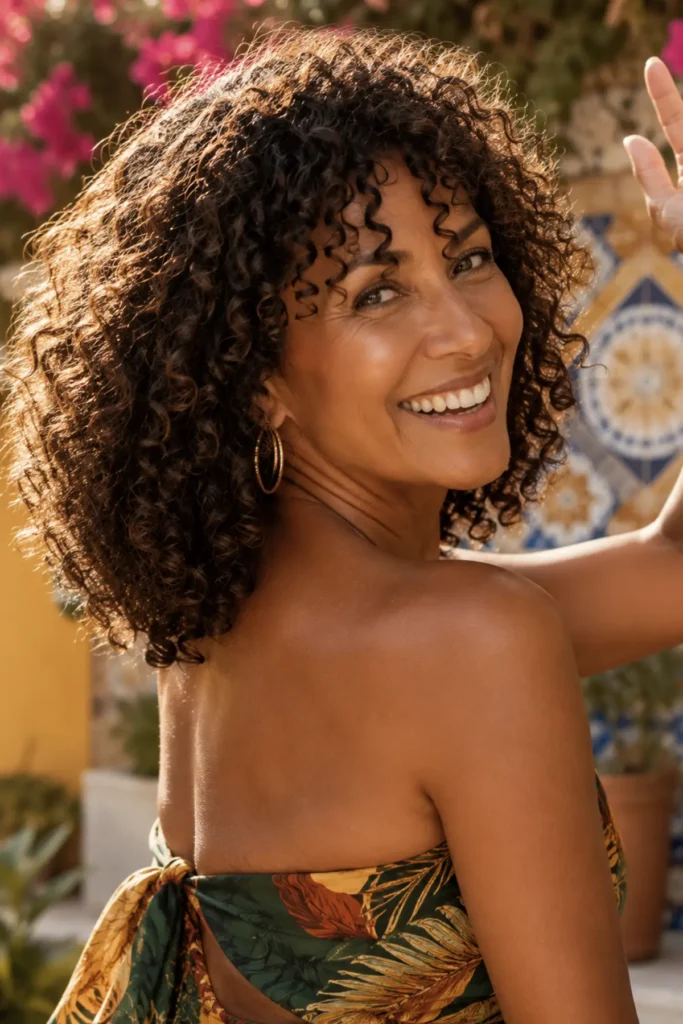
Curly hair and lob length have a complicated relationship, because curly hair doesn’t behave like straight hair at the same measured length. The curl pattern changes the silhouette entirely. This cut is designed around the curl: the layering removes weight from the mid-section to prevent the triangular shape that uncut curly hair often develops, while keeping enough length that the lob reads as a lob, not a bob, once the curls spring up.
BEST FOR
- 2C to 3C curl patterns
- Oval and heart face shapes
- Women embracing natural curl
- Medium to thick density
Why It Works
The right layering allows each curl to move independently rather than in a heavy block. The result is a lob with genuine volume and definition, not volume created by product. It comes from the cut itself.
Salon Tip
Ask your stylist to cut the curls dry, not wet. Wet cutting curly hair is faster for the stylist but produces far less predictable results.
Styling Advice for Women Over 50
The Tool Worth Investing In
A good ionic dryer makes more difference on fine or dry hair than almost any product. Ion technology reduces frizz during drying without requiring high heat, which matters because heat is one of the primary causes of ongoing dryness and breakage in hair that’s already compromised. You don’t need the most expensive one on the market. You need one with a concentrator nozzle and a cool shot button, both of which you should be using on every blowout.
Adding Volume Without Damage
Root-lifting spray is the most underused product in the over-50 toolkit. Apply it to the roots only, not through the lengths, before blow-drying. The mid-lengths and ends don’t need lift; adding product there weighs them down. Dry shampoo isn’t just for second-day hair: used at the roots before styling, it also adds grip and volume to fine hair.
Managing Gray Hair’s Specific Needs
Gray hair is naturally drier than pigmented hair because the melanin that used to keep the hair shaft more supple is no longer there. A weekly deep conditioning treatment isn’t optional on gray hair. The difference is visible: gray that looks luminous versus gray that looks dull. Keep oil and heavy conditioner away from the roots. Apply a light hair oil to the ends only, and a purple or blue-tinted shampoo once a week to offset any yellow.
The Day-Two Strategy
Most of the cuts in this guide are designed to look reasonably good without a full restyle on day two. Dry shampoo at the roots, a light spritz of water to reactivate any wave or curl, and fingers rather than a brush for mid-length adjustments. For bobs specifically: a flat iron pressed quickly along the exterior line takes three minutes and transforms the look from lived-in to deliberate.
Maintenance Tips
How Often Should You Get a Haircut?
A rough framework: short cuts (pixie, French bob) need shaping every 4–6 weeks. Medium cuts (bob, bixie, lob) work on a 7–9 week cycle. Long cuts can often stretch to 10–12 weeks. Fine hair, whatever the length, benefits from more frequent trims even when no length is being removed. A “dusting” that removes the thin, wispy ends that develop faster on fine strands.
At-Home Care Between Appointments
Three things that make a measurable difference: heat protectant every single time, without exception; a weekly deep conditioning treatment if your hair is gray, colour-treated, or dry; and a silk or satin pillowcase to reduce overnight friction and the morning frizz and breakage that comes with it. These aren’t luxuries. They extend the life and look of your cut between appointments.
When the Cut Isn’t Working
Signs: the style collapses by mid-morning; it only looks good for a few hours after a salon blowout; it needs more product than feels reasonable. This is almost always a layering issue, not a length issue. The solution is not necessarily to cut more off. Go back to your stylist and describe the specific problem clearly. “The volume I have right after a blowout is completely gone by noon” is far more useful to a stylist than “it’s not working.”
How to Talk to Your Stylist: Four Scripts Worth Saving
The salon consultation is where most haircut decisions actually happen, and most people aren’t well-equipped for it. These scripts give you specific language for four common situations:
If you want more volume at the crown: “I’d like to focus on crown volume. Can we talk about whether layers or a shorter length would achieve that better for my texture?”
If you’re growing out colour toward natural gray: “I’m moving away from full coverage colour. Can we discuss a cut and maybe a balayage blend that makes the grow-out look like a colouring choice rather than neglect?”
If you’re unsure about going shorter: “I’d like to try something shorter but I want to build up to it. Can we take a few inches off today and see how the shape works before going further?”
If you have fine or thinning hair: “My hair is quite fine at the crown. I want a cut that adds the impression of volume, probably with layering, without removing so much weight that it falls flat. What do you recommend?”
Frequently Asked Questions
What is the most flattering haircut for a woman over 50?
The soft jaw-length bob is the most broadly flattering single cut in this guide. It works on most face shapes, suits fine to medium density, and requires a reasonable amount of maintenance. More specifically: it lands at the jaw, which frames the lower face; the feathered ends give it movement; and the shape works whether you blow it out or let it air-dry. It’s not the right answer for everyone (nothing is) but it’s the closest this guide gets to a universal recommendation.
Should women over 50 cut their hair short?
No, not as a rule. Short hair solves specific problems, particularly for fine hair that has lost density, where short length removes the weight that was pulling the hair flat. But if your hair has reasonable density and you want to keep length, the right cut can make long or medium hair look just as good, sometimes better. The real question is: what does my hair need, and which cut provides it? “what does my hair need, and which cut provides it?”
What haircut works best for fine thinning hair over 50?
For genuinely very fine or thinning hair, a feathered pixie or volume bob gives the most honest results. Both remove the length at which fine hair struggles most, and both use technique (feathered ends, rounded blowout) to create the impression of density. If going short isn’t an option, the wispy layered lob with a razor-cut finish is the most workable medium-length choice for fine hair.
Are curtain bangs a good idea after 50?
Yes, with one caveat. The wispy, open quality of curtain bangs makes them forgiving to grow out and genuinely flattering around the eyes. They don’t suit very narrow foreheads, because the width of the parted bang can further crowd a limited forehead space. For everyone else, they’re one of the lower-risk experiments in hairstyling. Try them at a slightly longer length than you think you want; they can always be shortened on a follow-up visit.
What is a bixie haircut and is it good for women over 50?
The bixie sits between a pixie and a bob. It is longer than a classic pixie, shorter than any bob, with feathering throughout. It’s a genuinely useful transition cut for women who want the benefits of going shorter (volume, lighter weight, faster styling) without committing to a true pixie. It grows into a classic bob rather than an awkward in-between shape. For fine to medium hair, it’s one of the smarter options in this length range.
How do I make my haircut look good longer between appointments?
Product discipline and mechanical care are the most effective tools. Keep conditioner and heavy products away from your roots, as they weigh down the root area where you most want lift. A silk pillowcase reduces overnight friction that causes morning frizz and makes hair look unkempt faster. Dry shampoo used at the roots before styling (not just as a refresh) adds grip and lift. And ask your stylist for a “dusting” trim, a very light trim that removes the thin ends without taking length, if your ends feel stringy between appointments.
Can long hair look good after 50?
Yes. Long hair after 50 requires more intentional cutting, meaning strategic layering to prevent the dragging weight that density loss creates, and it absolutely works. The soft shag, octopus cut, long layers with face-framing pieces, and textured lob all appear in this guide at lengths that qualify as long. The most common mistake is keeping long hair blunt and one-length, which emphasises any loss of density. Add the right layers and long hair after 50 can look as good as it ever did.
How to Choose the Right Hairstyle
Start with the two factors that matter most before style comes into the picture: density and maintenance. If you have fine or thinning hair, your cut needs to accommodate it, not work against it. If you genuinely won’t spend more than ten minutes on your hair each morning, a cut that requires daily styling will look bad most of the time, regardless of how good it looks in the photo.
Then consider your face shape, not as a rigid rule but as guidance. The recommendations in this guide identify which cuts tend to work for which face shapes and, importantly, which combinations to avoid. Those aren’t aesthetic opinions; they’re based on how proportion and line interact at different lengths and silhouettes.
Finally: what do you actually want? Not what you think you should want, not what looks good on someone else. The best haircut is one you’re willing to maintain and that you’re comfortable seeing on yourself on a regular day, not just a salon day.
Common Mistakes to Avoid
Bringing one photo with different hair to your stylist. Reference photos are helpful: they communicate direction and mood. But a photo of someone with thick, wavy hair describing a cut you want on fine, straight hair sets both you and your stylist up for disappointment. Bring photos of people with similar hair to yours.
Going too light on layers out of fear. Many women over 50 ask for “just a little” layering because they’re nervous about losing length. The result is hair that has neither the structure of a blunt cut nor the movement of a layered one. If you want layers to make a difference, they have to be real layers.
Waiting too long between trims on fine hair. Fine hair develops thin, wispy ends faster than thicker hair. Those ends make the hair look sparse and damaged, which undermines the cut. A trim every 7–8 weeks, even if no length is being removed, keeps fine hair looking healthy.
Choosing a cut based on maintenance you won’t realistically do. A French bob that you’re not going to trim every five weeks becomes an entirely different (and less flattering) shape by week ten. Choose the cut you’ll actually maintain, not the cut you want to want.
Final Thoughts
The right haircut after 50 isn’t about reversing anything or compensating for anything. It’s about finding a cut that works for the hair you have now (its density, its texture, its color) and that fits the way you actually live. Some of the cuts in this guide are quick and low-maintenance. Others require real commitment to regular appointments and a daily routine. None are universally right for everyone.
Save this article before your next salon visit. Even if you already have a sense of what you want, the descriptions of what makes each cut work, and for whom, are the kind of detail that makes a stylist consultation more productive. The more specific you can be in the chair, the better the result.
And if you try something and it isn’t quite right: hair grows. The cut that taught you what you actually wanted is rarely a waste.
Related Hairstyles:

1 thought on “25 Best Haircuts for Women Over 50 That Flatter Every Face Shape”
Comments are closed.